An unlikely stained-glass window, a forgotten French cartoonist, and a little detective work.
Some time ago, I was sifting through old issues of LIFE magazine—the original American humor magazine, not the later photojournalism magazine—scanning Milt Gross cartoons for a future volume in my The Art of Milt Gross series. I kept getting distracted by all the other wonderful artwork in these nearly century-old magazines. Then I came across something extraordinary.
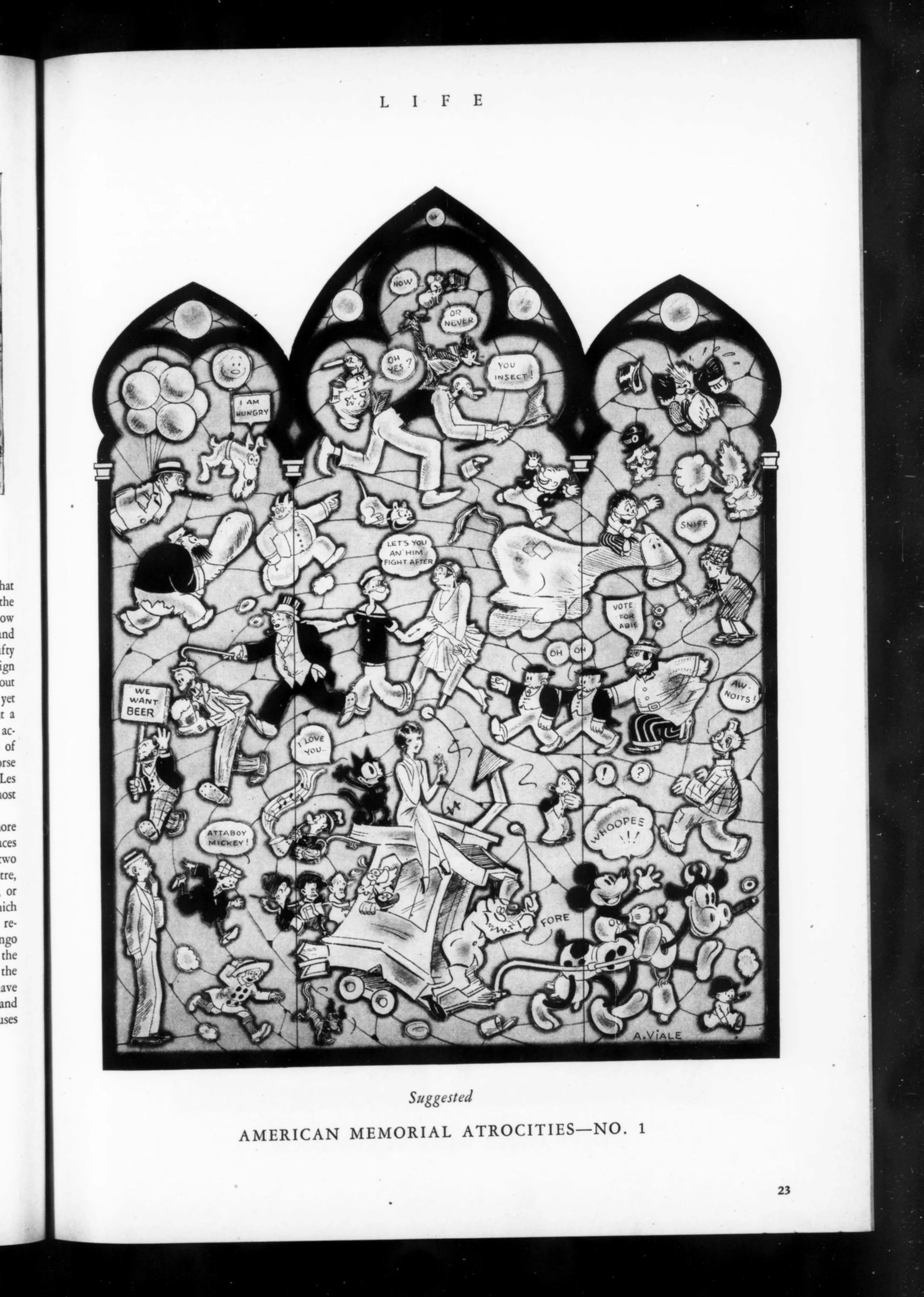
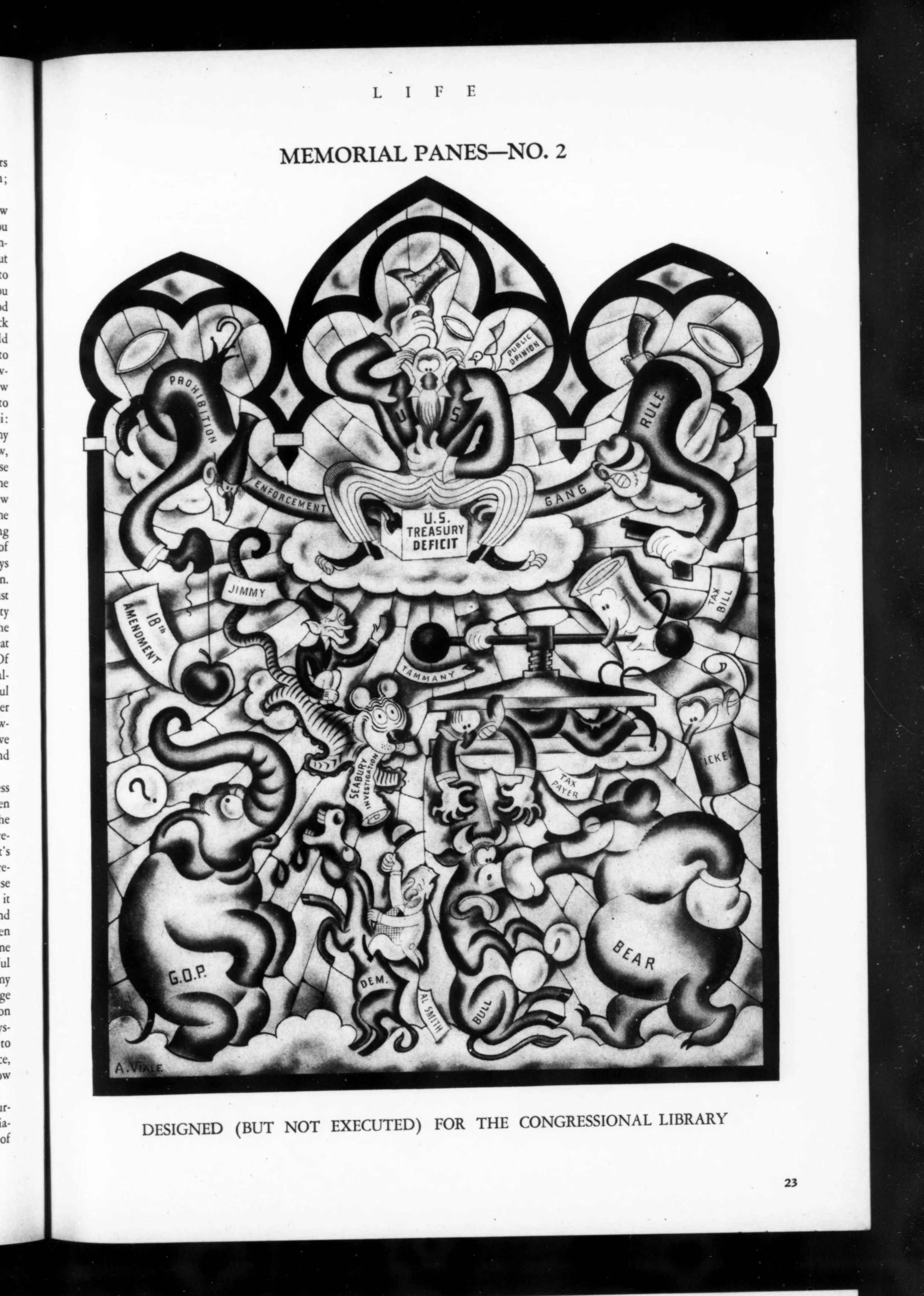
It was an elaborate stained-glass cathedral window filled with comic-strip and animated cartoon characters. Mickey Mouse, Felix the Cat, Popeye, and dozens of other familiar figures appeared in a gloriously absurd composition that looked like something rescued from a church devoted to the worship of funny papers.
The signature simply said “A. Viale.” I knew nothing about him, but his drawing was marvelous—smooth, rounded forms, beautifully controlled shading, and a wonderfully cockeyed sense of humor. The artwork appeared to have been made with an airbrush, a technique that was enjoying considerable popularity among commercial illustrators of the period. A quick search online yielded bupkis. A “msykery,” as E. C. Segar might write.
I filed the image away among the many discoveries I've accumulated over the years.
From Magazine Page to Art Print
One of the ideas behind Erratic Press is to find different ways for people to enjoy and connect with lost treasures of comic art. Not everything belongs in a book. Some images deserve to be seen on a wall, worn on a shirt, or enjoyed as individual works of art—rather like the different ways an art museum makes its collections accessible.
This LIFE cartoon seemed perfect for this.
I restored and colored the art and then experimented with reproducing the image as a print, but the results were disappointing. The original artwork is incredibly intricate, and the reproductions I received from my usual printers just didn't have the richness and clarity I wanted. I wasn't comfortable offering it for sale.
I did, however, produce a T-shirt featuring the illustration, and I liked the results. Still, the art print remained on my unfinished-project list.
Then, recently, a customer wrote asking if I could make the image available as a print.
That was the nudge I needed.
After much searching, I found a professional printing company that could produce an excellent archival-quality color giclée print on thick, archival quality art paper, complete with a protective backing board and sleeve. I ordered a test.
And when it arrived—wow! The colors, fine lines, and delicate tonal gradations were beautifully reproduced. Finally, this remarkable image looked the way I thought it should.
But there was still something bothering me. Who the heck was Viale?
Following the Trail
I decided to put aside my work on the Edwina Dumm book (getting close now!) for a day and see what I could discover.
I began by returning to the old LIFE magazines. And there he was, again and again!
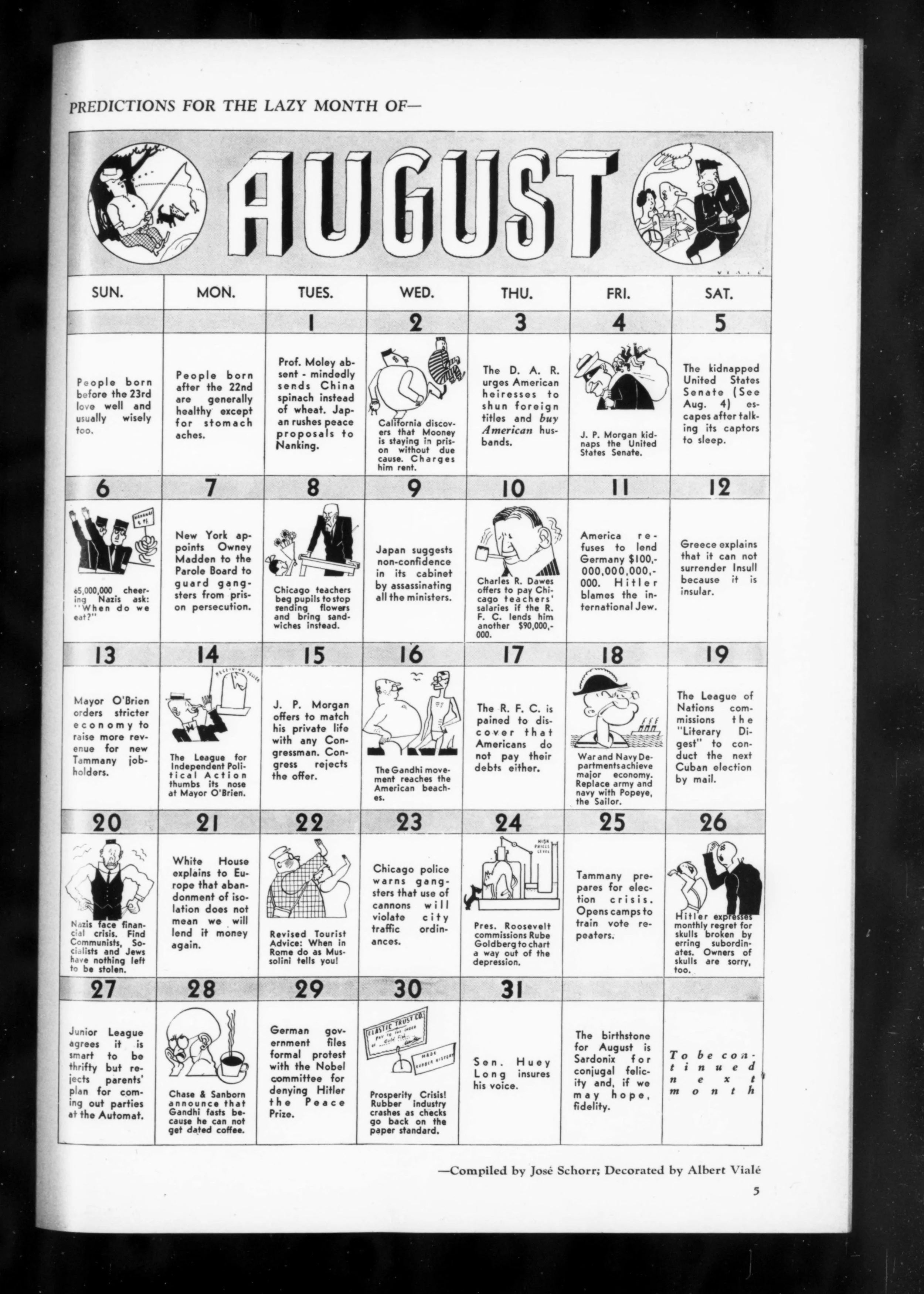
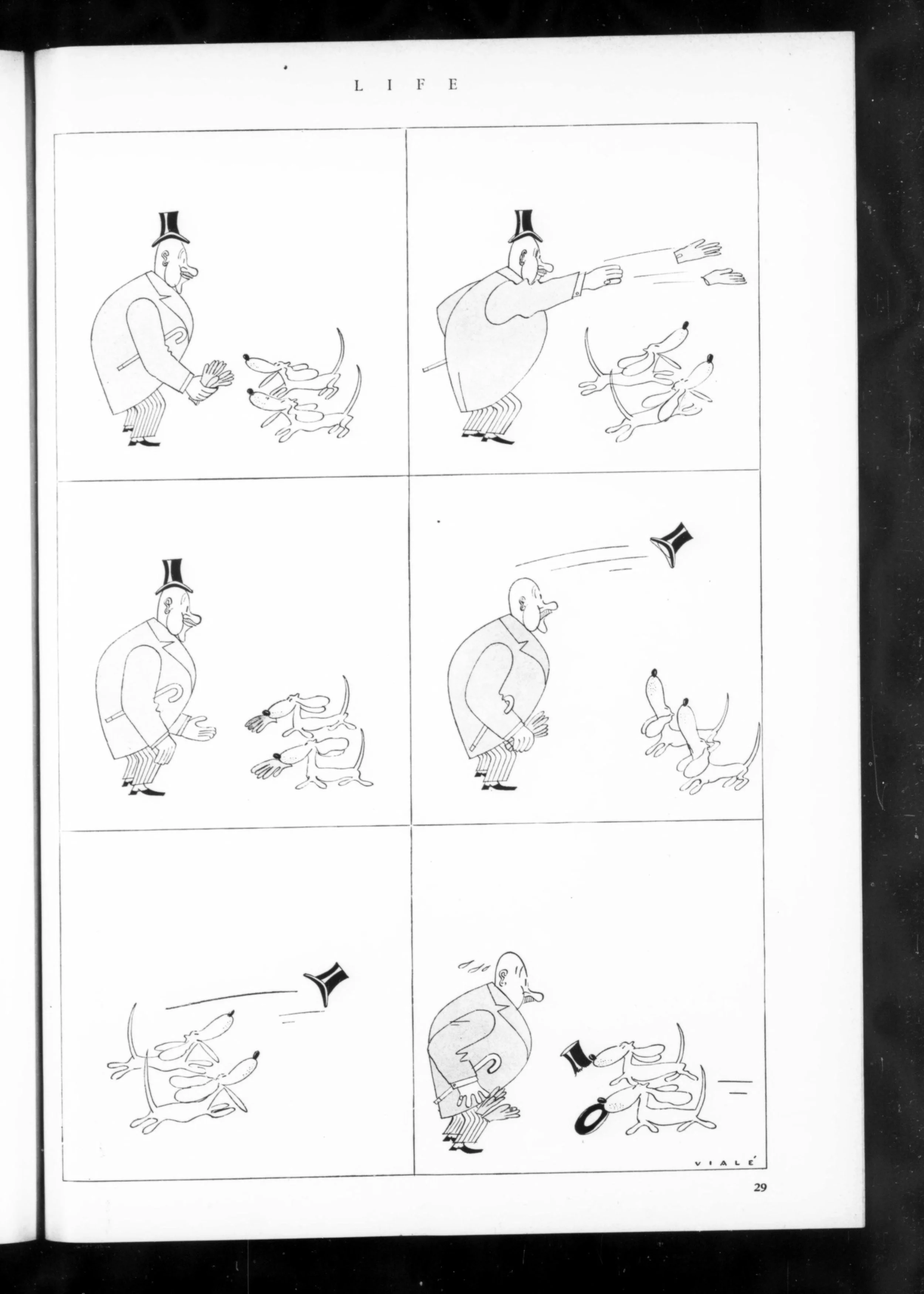
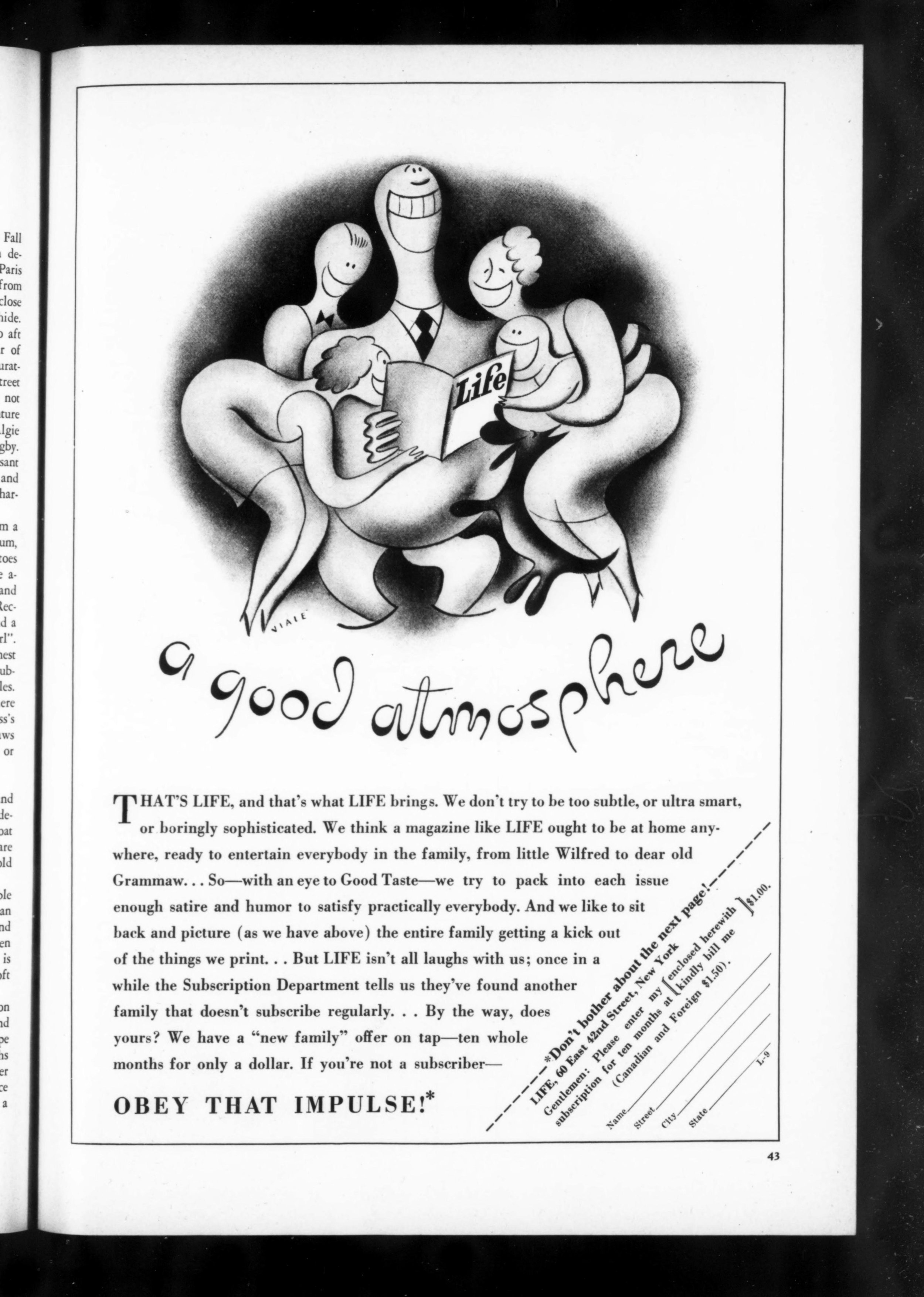
Vialé wasn't just an occasional contributor. I found his work throughout the magazine during 1932 and 1933: political cartoons, wordless comic strips, spot illustrations, elaborate advertisements promoting LIFE itself, and decorations for recurring features such as the magazine's monthly calendars. He even illustrated a piece by the great humorist S. J. Perelman featuring Jimmy Durante.
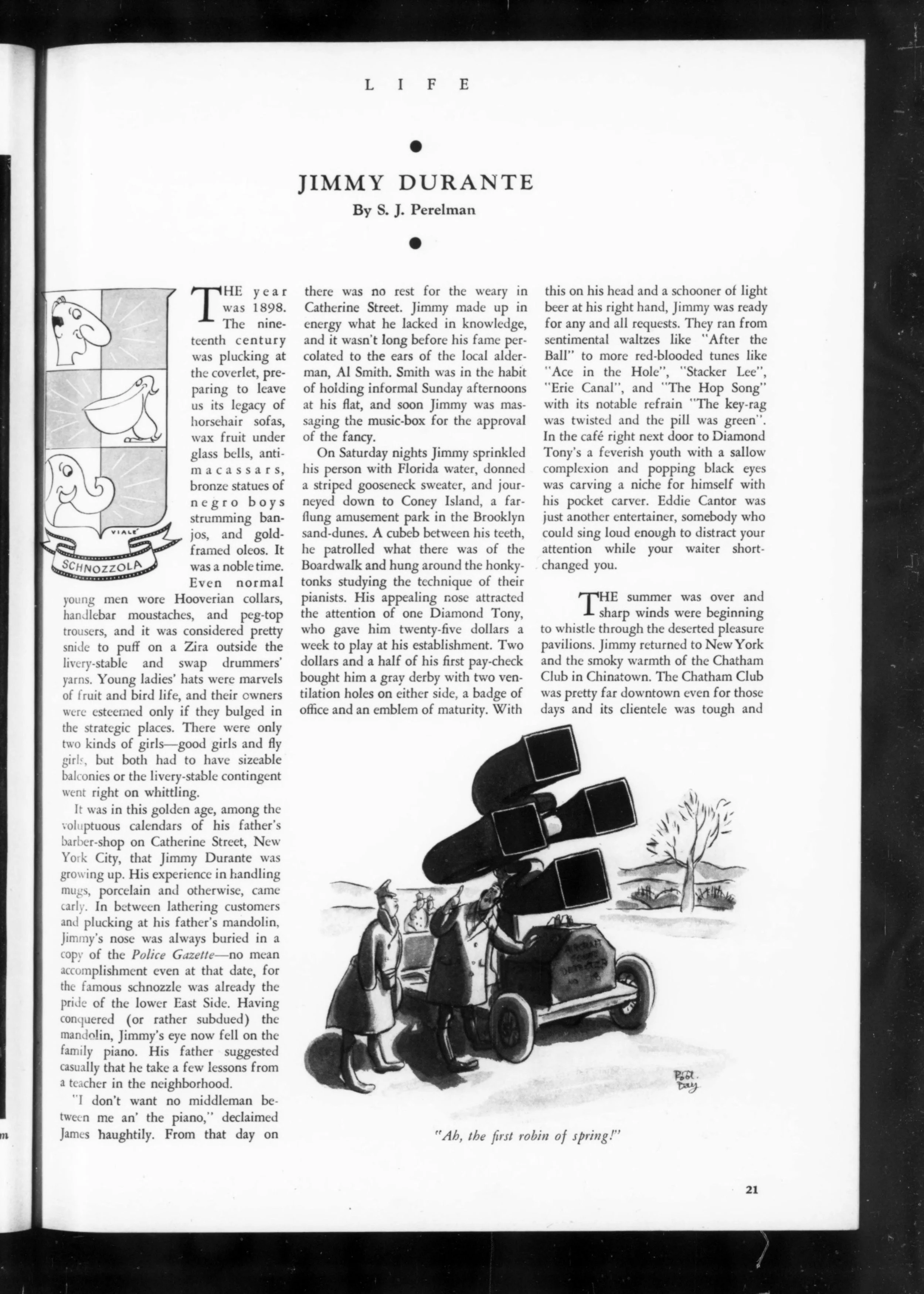
His work seemed to be everywhere. And it was right in line with the interest American magazines had in graphic styles from other countries during this period when one sees covers by Mexican caricaturist Miguel Covarrubias and the Russian cartoonist Alajalov. Maybe this was a window of opportunity for the French-born artist.
Then came the biographical detective work.
Vialé turns out to be surprisingly elusive. Searching online produced a few original drawings offered for sale, scattered references to his cartoons, and an intriguing museum record of a watercolor caricature of New York mayor Jimmy Walker. But almost nothing about the artist himself.
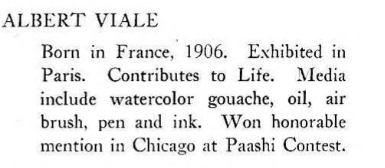
Eventually, I turned up a 1933 exhibition catalog for the Salon of American Humorists, a major exhibition of American comic art organized by the College Art Association. Four works by Vialé were included, alongside art by such accomplished illustrators as Boris Artzybasheff, Reginald Marsh, and John Sloan.
And there, finally, was a little biography!
The catalog revealed that Vialé was born in France in 1906, had exhibited his artwork in Paris, and worked in watercolor, gouache, oils, pen and ink, and airbrush. It also mentioned an honorable mention in an airbrush competition.
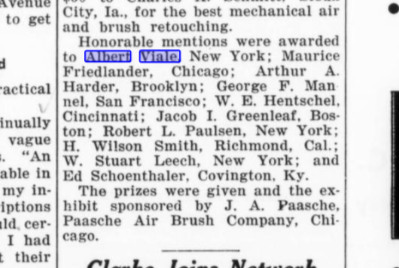
A little more digging turned up a May 1933 item in Advertising Age confirming that Vialé, then working in New York, had received an honorable mention in a competition sponsored by the Paasche Airbrush Company of Chicago.
I also found French genealogical records for a Charles Albert Viale, born in Menton, France, on February 23, 1906, and described as an artist-illustrator. This seems very likely to be our man, although I haven't yet established the connection conclusively.
So we have a few clues, but still no complete biography. Where did he study? How did he come to New York? Was he a freelancer or employed by LIFE? What happened to him afterward? Was he just in New York 1932-34? Did he keep selling to American magazines?
The mystery remains.
A Remarkable Comic Imagination
Meanwhile, I kept discovering more of his cartoons. And I found myself becoming increasingly fond of this forgotten artist.
Vialé had a remarkable gift for visual absurdity. His characters often look like inflated rubber sculptures, with bulbous heads, strangely elongated limbs, and beautifully rounded bodies. In his wordless comic strips, human anatomy obeys a logic entirely its own.
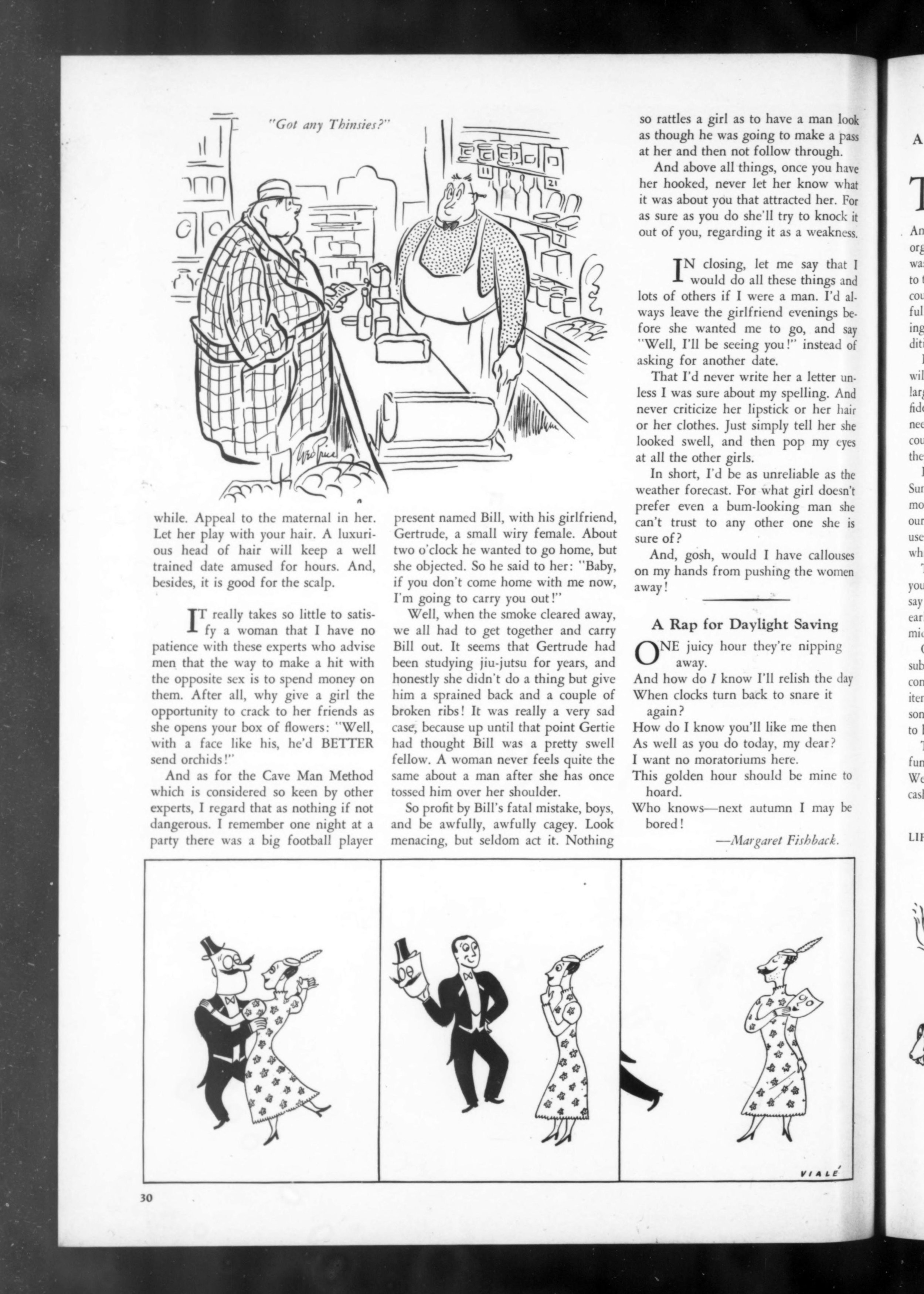
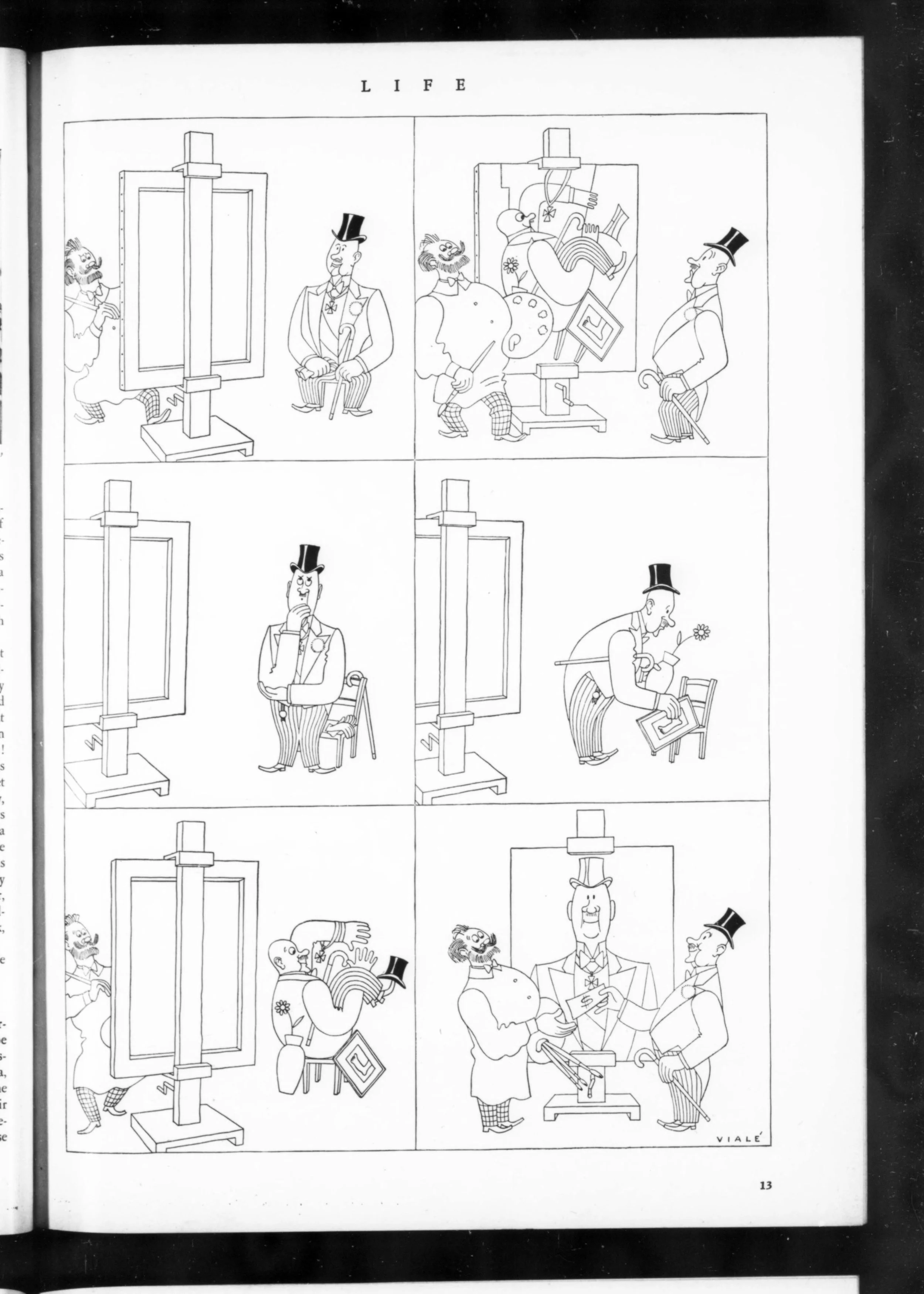
Some of these strips remind me of Cowboy Henk, the wonderfully bizarre Belgian comic by Kamagurka and Herr Seele, which began appearing almost fifty years later. There's a similar combination of deadpan humor, surreal invention, and cheerful disregard for physical reality.
His elaborate airbrush illustrations are just as impressive in an entirely different way. They combine extraordinary technical control with a delightfully mischievous imagination.
It's hard to believe an artist this good could become so obscure.
A Little Something Extra
By this point, I couldn't simply offer the print without sharing something about its creator.
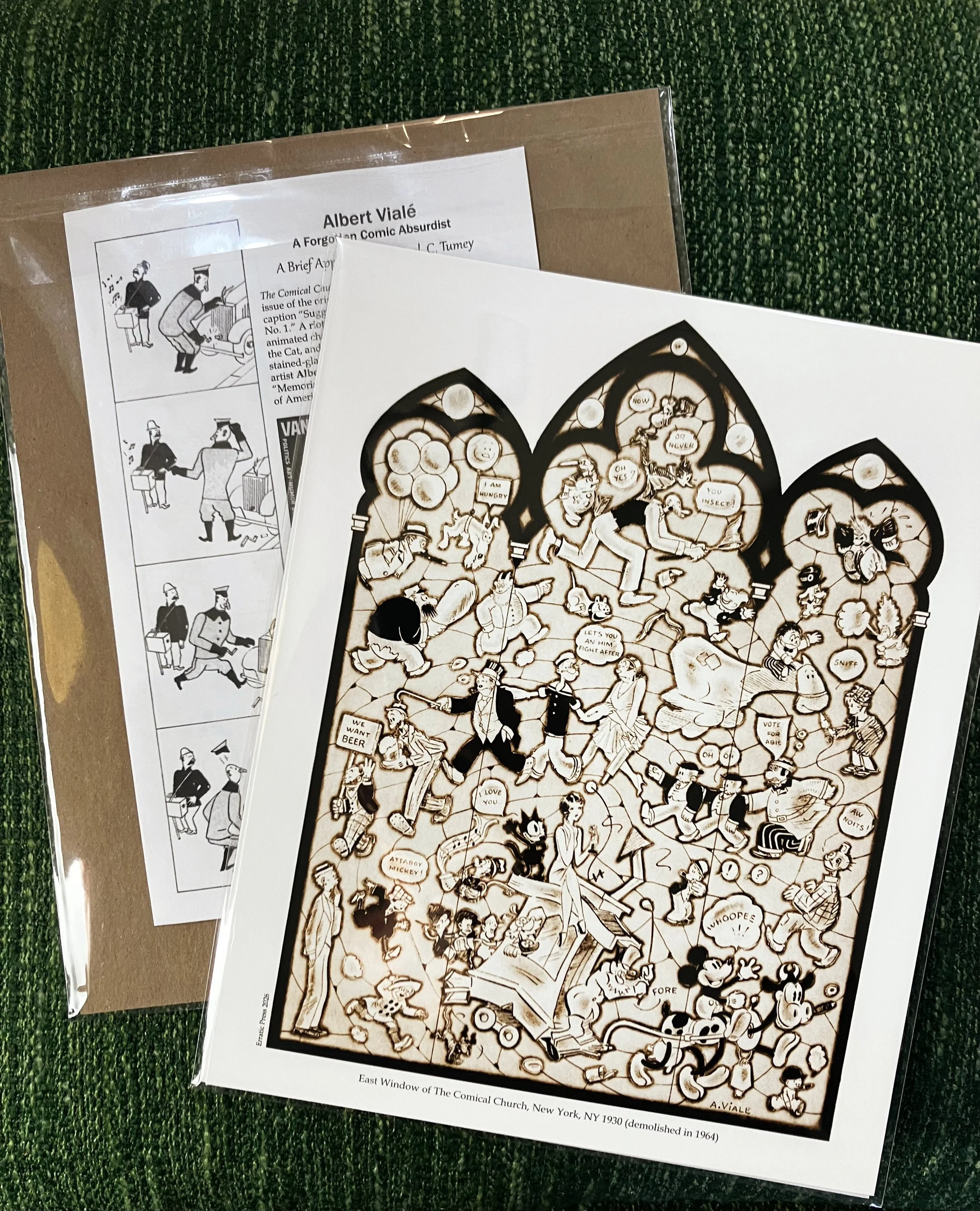
So I put together a little four-page illustrated booklet, featuring a short original essay about Vialé and several additional examples of his cartoons. I printed it myself, folded it, and tucked it behind the art print inside its protective sleeve.
I'm rather pleased with the result.
The finished 8.5 × 11-inch color giclée print is professionally reproduced on thick archival art stock and packaged with a backing board and protective glassine envelope. It ships flat, and the illustrated booklet is included at no additional charge. Cost is $14.95 and United States shipping for this item alone runs about $7.
I think it makes a lovely little package, especially for anyone who loves old comic strips, animation, illustration, and the wonderfully strange visual imagination of the 1930s.
And as for Albert Vialé, I suspect I'm not finished with him yet.
There's more artwork to discover, more research to pursue, and perhaps someday a fuller story to tell. In the meantime, I'm happy to have helped bring one of his most remarkable creations back into the light.
That's a big part of what Erratic Press is all about.
And here’s one last little discovery. This Vialé drawing, harvested from an art gallery’s website, was listed by the seller as a self-portrait and dated circa 1940.
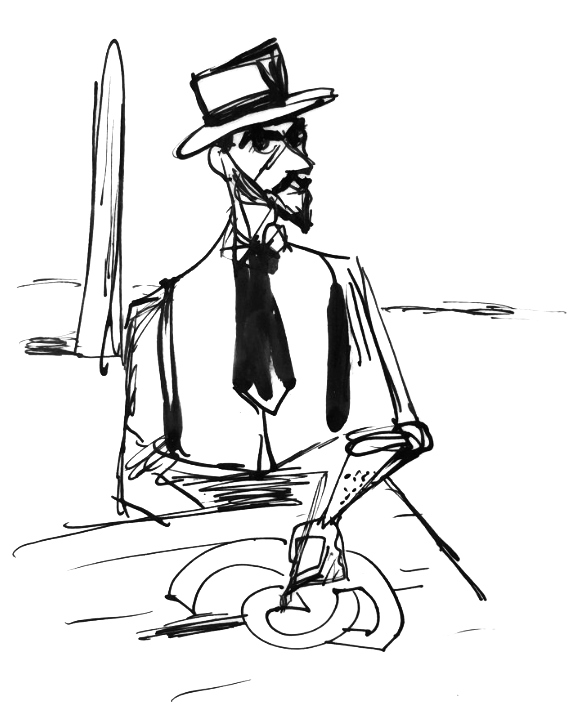
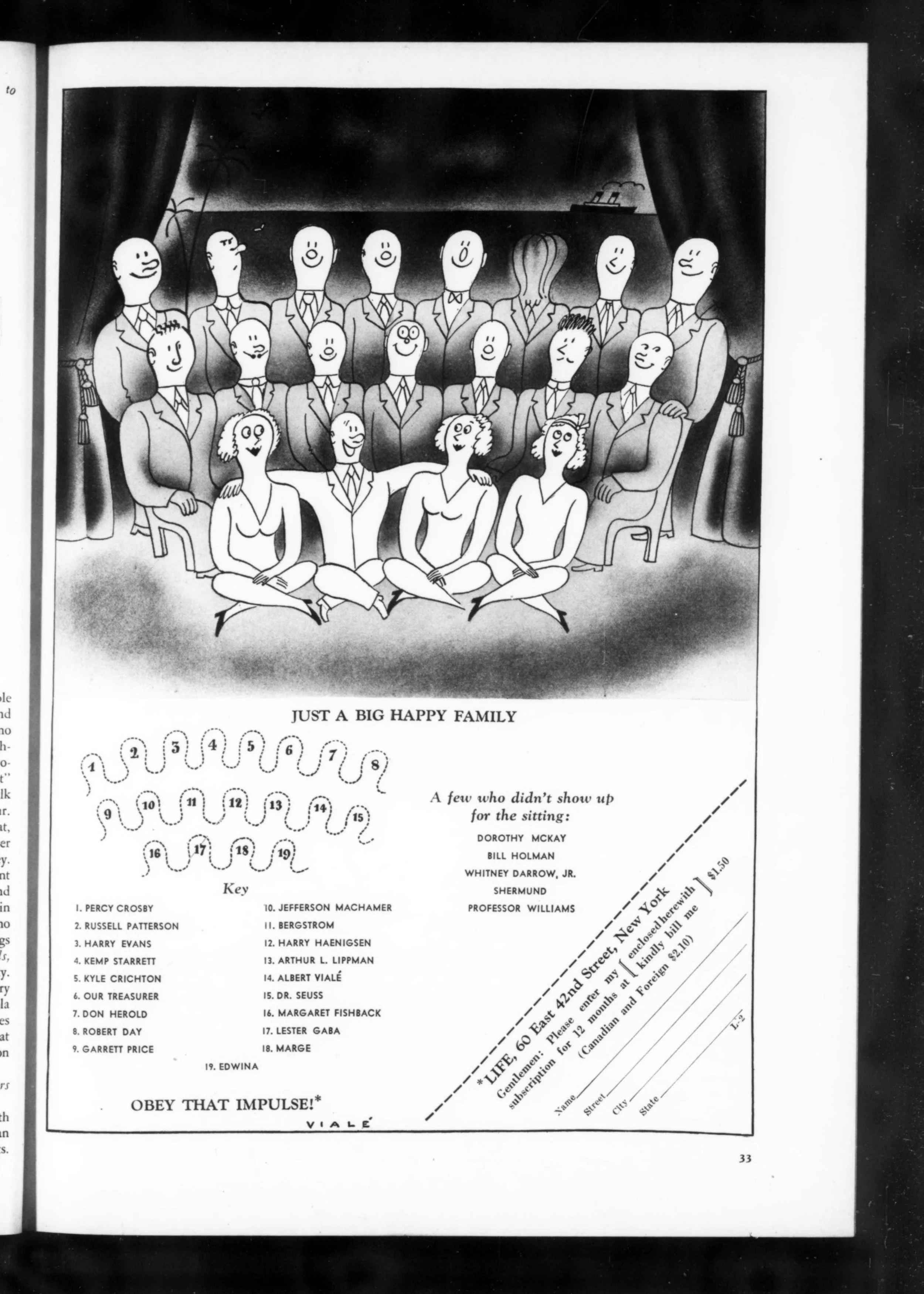
Intriguingly, here’s a terrific eccentric LIFE house ad by Vialé which makes no attempt to offer caricatures of the various cartoonists listed… expect for, perhaps, Vialé himself! I also feel like there’s a joke with “Our Treasurer” but I don’t get it. IN any case, there does seem to be a bit of similarity to the pointed nose and dark hair shown in the 1940 self-portrait.