
“Along with Tad Dorgan’s “Battle of the Century” prizefight cartoons, Art Young’s portraits of the Haymarket prisoners and especially Bill Mauldin’s extensive World War II work, Feiffer created some of the twentieth century’s most gripping comics journalism, paving the way for cartoonists like Joe Sacco, Sarah Glidden and Guy Deslisle.” - Michael Tisserand in The Comics Journal
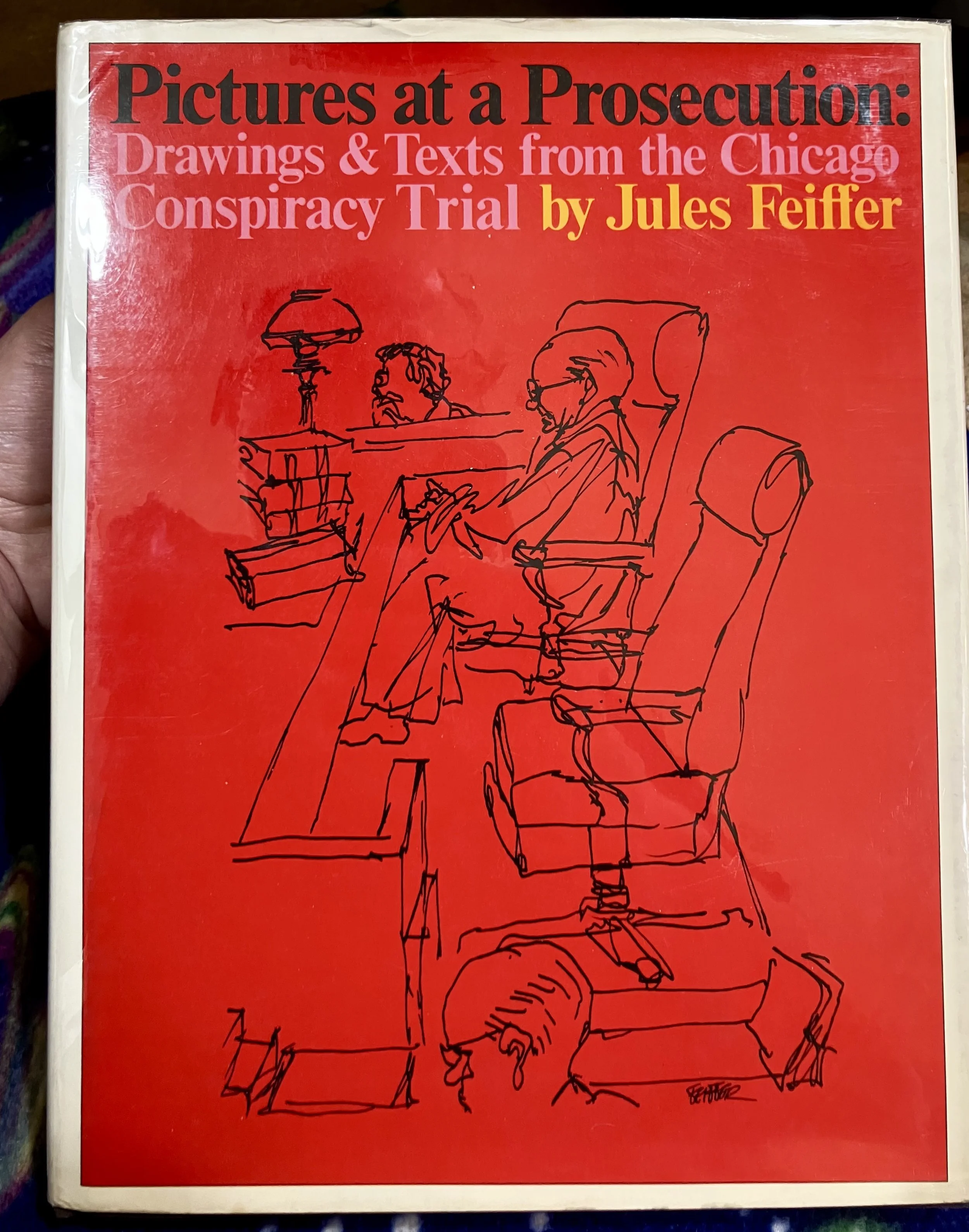
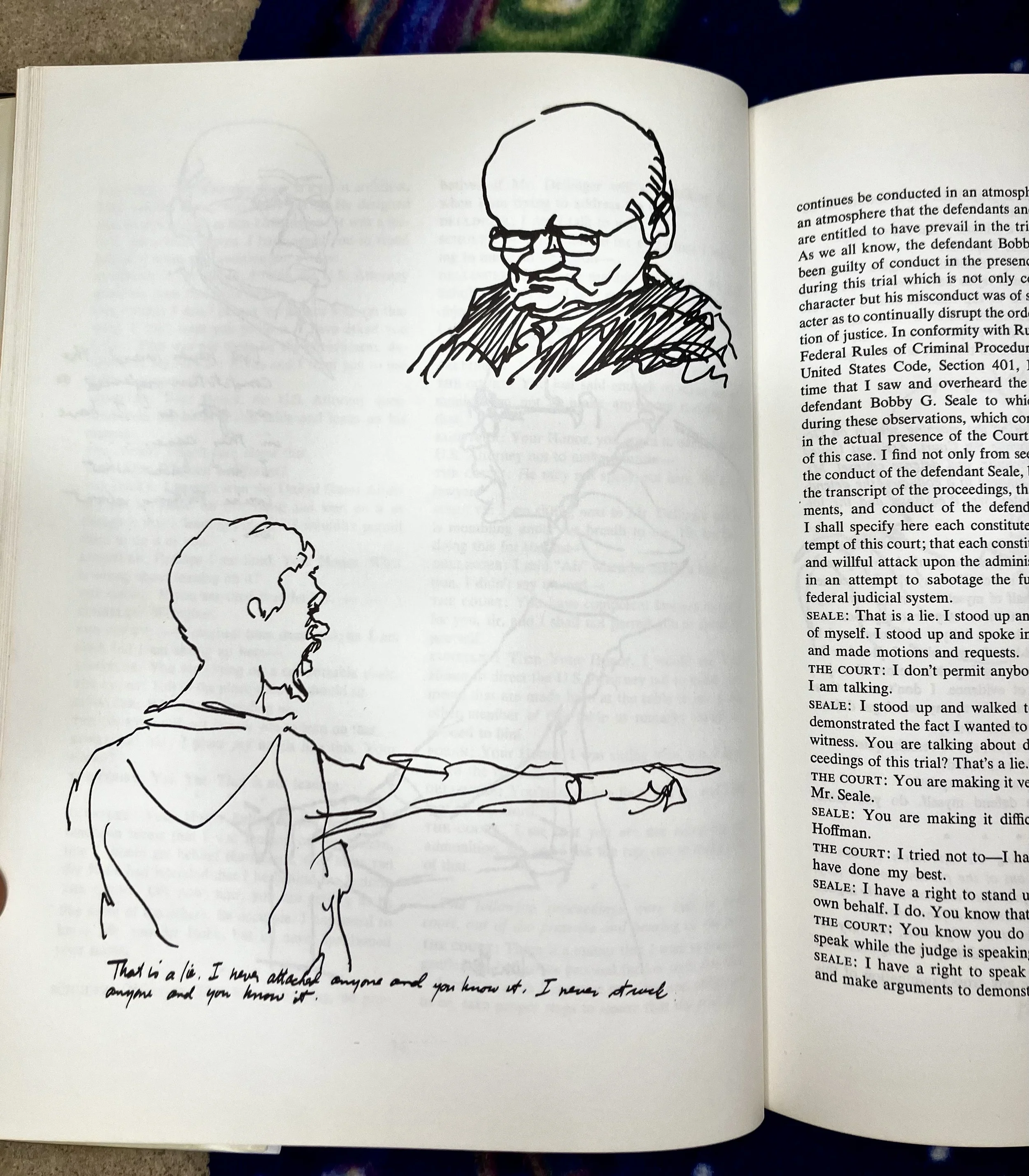
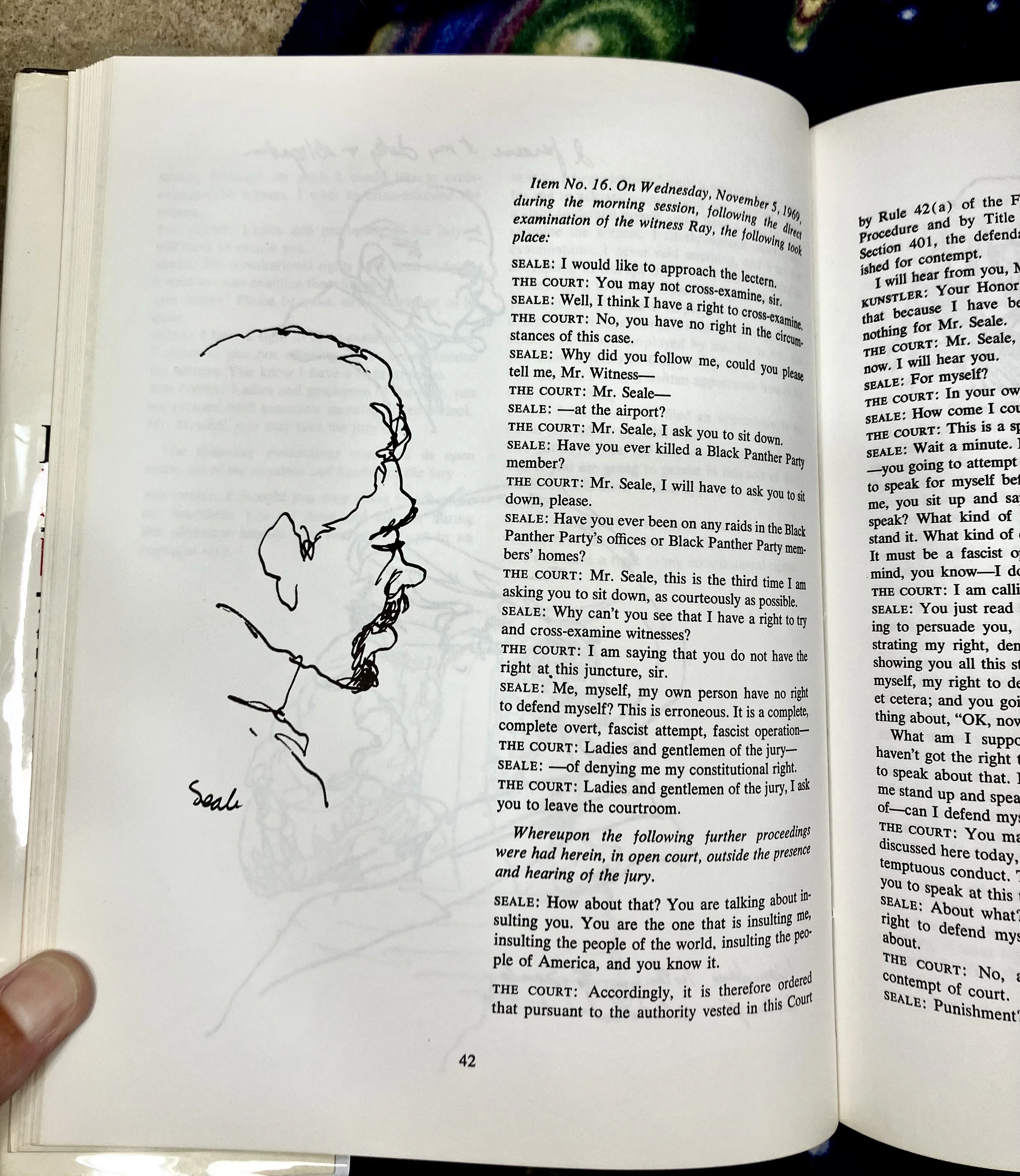
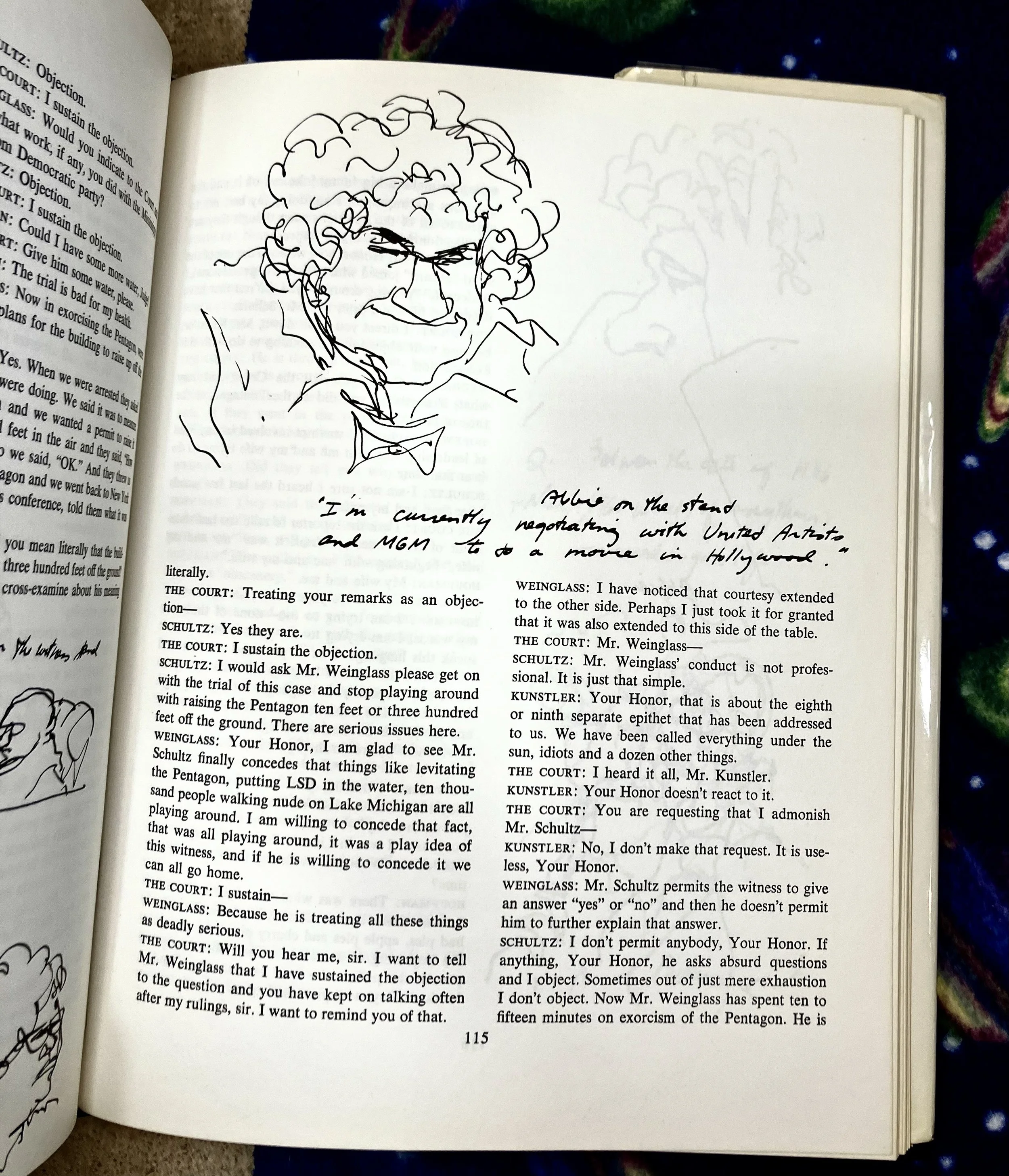
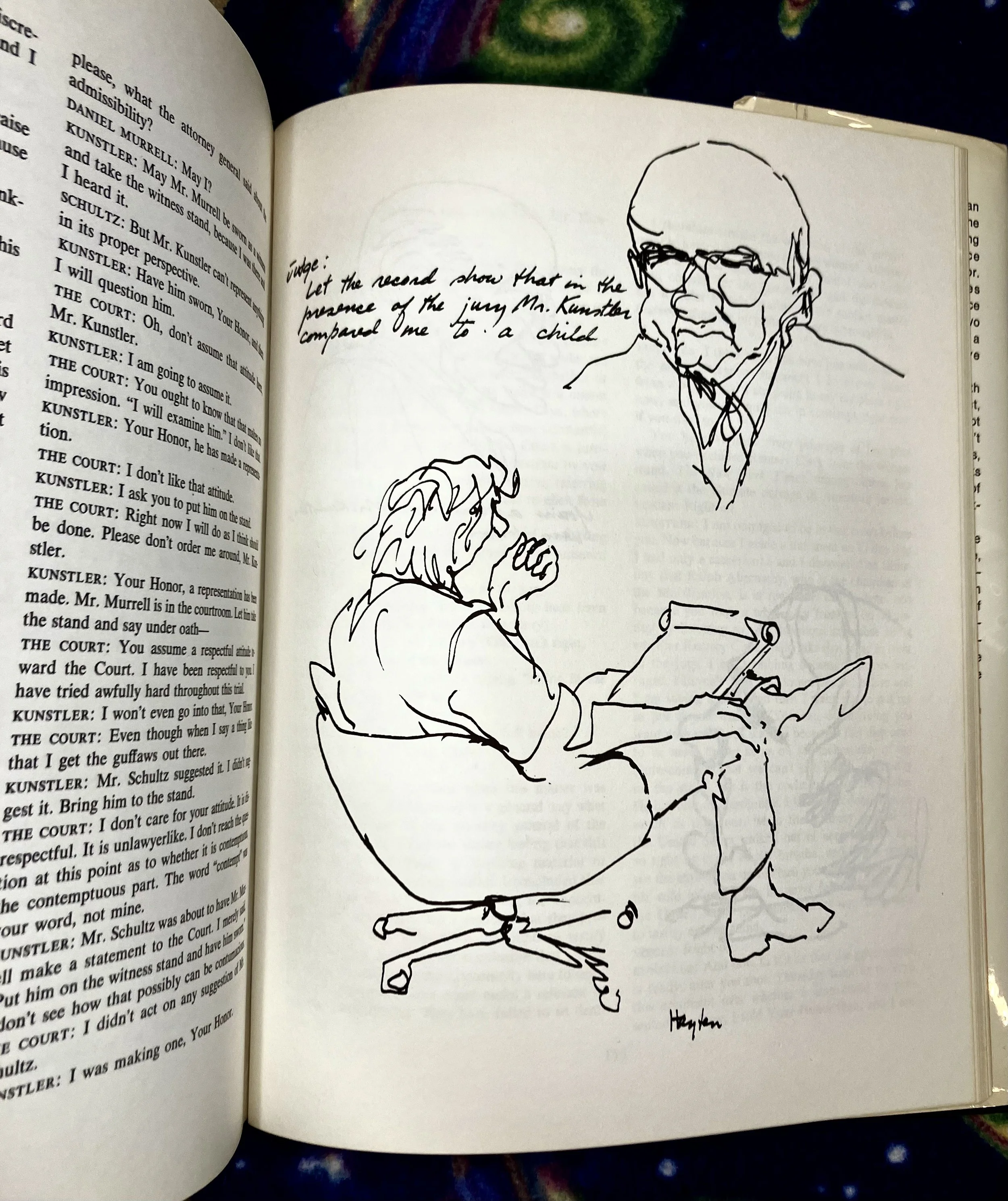
In late 1969 and early 1970, Jules Feiffer made several visits to Judge Julius Hoffman’s courtroom during the prosecution of 1968 Democratic National Convention protesters Abbie Hoffman, Jerry Rubin, Rennie Davis, David Dellinger, John Froines, Tom Hayden, and Lee Weiner (and Bobby Seale until he received a mistrial). These men, known as The Chicago Seven (or Eight) had been arrested at the Democratic National Convention while peacefully - but effectively — protesting the United States’ involvement in the Vietnam War. Photos were not allowed. So, sitting in the spectator’s section, Feiffer made 250 drawings and used his talent to capture what would otherwise have been lost - eyewitness impressions. This remarkable book, created by Feiffer includes transcripts from the trial with his drawings. As Feiffer writes:
“ The purpose of this book is to give the reader a sense of what it was like to do time in Julius Hoffman’s courtroom between September 24, 1969 and February 18, 1970. Toward that end I have raided and rearranged sections of the transcript, lifted out of context, trifled with chronology, and put together what I hope amounts to a cinema veritie version of the conspiracy trial.”
Judge Hoffman was, to say the least, politically biased and unfair to the men on trial. At one point, Feiffer draws the Judge mocking reciting Seale’s word in blackface. Feiffer cynically and presciently goes on: “If in reading this the atmosphere of oppression becomes intolerable … you’re on your way to understanding what it was like to be there and what it’s going to be like at future political trials.”
Here’s you chance to own and study a landmark piece of comics journalism and perhaps the least-known of Feiffer’s many outstanding accomplishments.
Condition
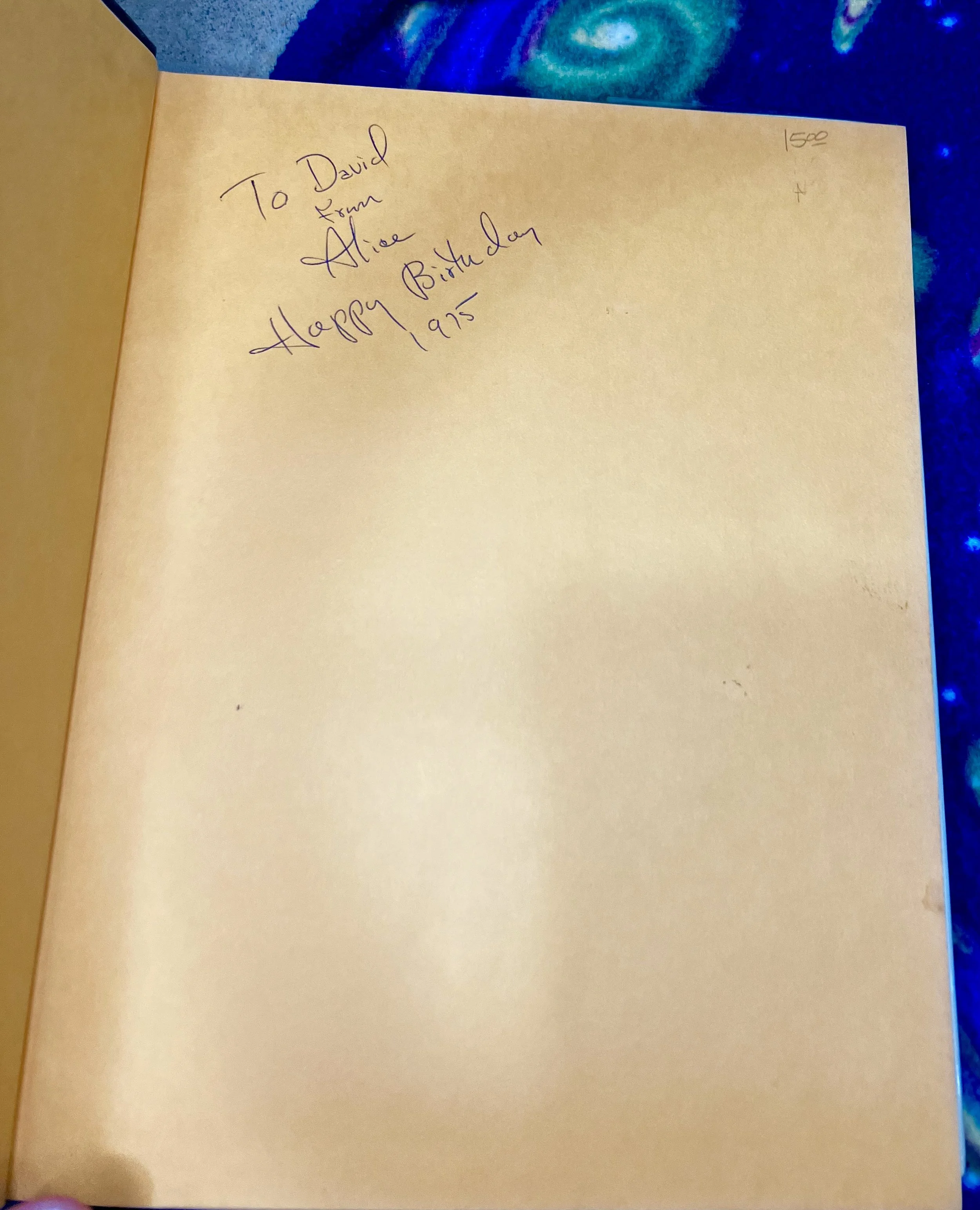
Hardcover with dustjacket in mylar. Very minor wear on DJ, inside clean. Inscription on flyleaf (see photo). Pages otherwise unmarked and white. Binding sound,. Solid Good to Very Good.
“Along with Tad Dorgan’s “Battle of the Century” prizefight cartoons, Art Young’s portraits of the Haymarket prisoners and especially Bill Mauldin’s extensive World War II work, Feiffer created some of the twentieth century’s most gripping comics journalism, paving the way for cartoonists like Joe Sacco, Sarah Glidden and Guy Deslisle.” - Michael Tisserand in The Comics Journal
In late 1969 and early 1970, Jules Feiffer made several visits to Judge Julius Hoffman’s courtroom during the prosecution of 1968 Democratic National Convention protesters Abbie Hoffman, Jerry Rubin, Rennie Davis, David Dellinger, John Froines, Tom Hayden, and Lee Weiner (and Bobby Seale until he received a mistrial). These men, known as The Chicago Seven (or Eight) had been arrested at the Democratic National Convention while peacefully - but effectively — protesting the United States’ involvement in the Vietnam War. Photos were not allowed. So, sitting in the spectator’s section, Feiffer made 250 drawings and used his talent to capture what would otherwise have been lost - eyewitness impressions. This remarkable book, created by Feiffer includes transcripts from the trial with his drawings. As Feiffer writes:
“ The purpose of this book is to give the reader a sense of what it was like to do time in Julius Hoffman’s courtroom between September 24, 1969 and February 18, 1970. Toward that end I have raided and rearranged sections of the transcript, lifted out of context, trifled with chronology, and put together what I hope amounts to a cinema veritie version of the conspiracy trial.”
Judge Hoffman was, to say the least, politically biased and unfair to the men on trial. At one point, Feiffer draws the Judge mocking reciting Seale’s word in blackface. Feiffer cynically and presciently goes on: “If in reading this the atmosphere of oppression becomes intolerable … you’re on your way to understanding what it was like to be there and what it’s going to be like at future political trials.”
Here’s you chance to own and study a landmark piece of comics journalism and perhaps the least-known of Feiffer’s many outstanding accomplishments.
Condition
Hardcover with dustjacket in mylar. Very minor wear on DJ, inside clean. Inscription on flyleaf (see photo). Pages otherwise unmarked and white. Binding sound,. Solid Good to Very Good.